Disaster Journalism: Reporting Safely and Ethically
Original price was: $249.00.$199.00Current price is: $199.00.
Disaster Journalism: Reporting Safely and Ethically equips you with the knowledge to report more safely, accurately, and responsibly in disaster-affected environments. Designed for journalists, editors, media teams, and communicators, this course builds essential skills in preparation, risk assessment, verification, ethical reporting, coordination, and resilience under pressure. Ideal for anyone involved in disaster coverage or crisis communication.
Description
The Disaster Journalism: Reporting Safely and Ethically online course is a practical, real-world focused training programme for journalists, media professionals, and communicators working in or around disaster-affected environments.
Whether you’re reporting from the field, supporting coverage from a newsroom, producing disaster-related content, or communicating during a crisis, this course gives you a structured foundation for making better decisions under pressure.
Disaster Journalism Course for Real-World Reporting
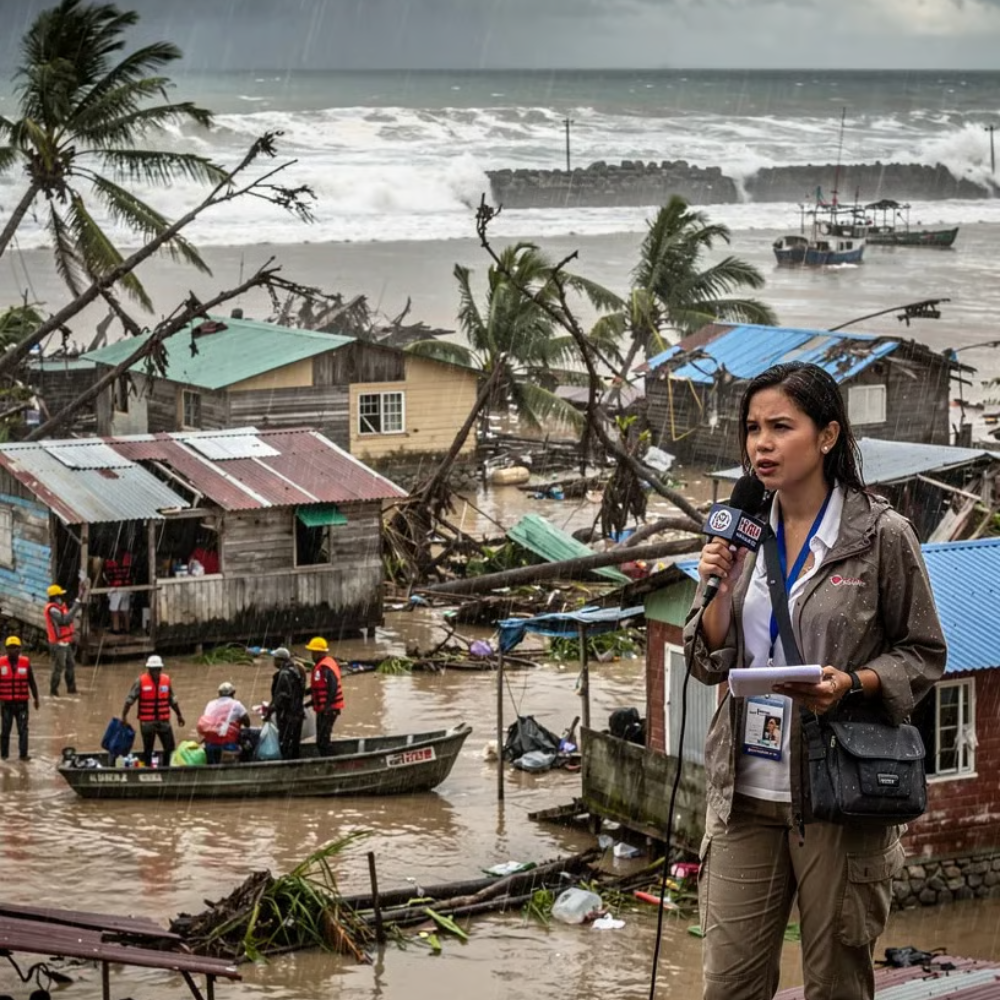
Disaster reporting places journalists in fast-moving environments where information is incomplete, conditions change quickly, and poor judgment can have serious consequences.
This course focuses on the key decisions journalists may face before, during, and after an assignment, including how to prepare, assess risk, verify information, protect vulnerable people, coordinate with stakeholders, and manage the psychological demands of the work.
It combines reporting principles with field safety, ethical decision-making, verification, stakeholder coordination, and resilience. The practical scenarios, knowledge checks, and decision-making points help learners apply each topic to realistic disaster reporting situations.
This makes the training useful for both field deployment and newsroom-based support roles, especially where speed, accuracy, safety, and public trust all matter.
Why This Training Matters
Disaster coverage can influence how people understand risk, respond to warnings, seek help, and make decisions during a crisis. Poor reporting can spread confusion or cause harm, while careful reporting can support public safety, community understanding, and more responsible response.
This course helps learners build a stronger professional foundation for working in high-pressure environments where information changes quickly and the consequences of mistakes can be serious.
Who This Course Is For
This course is designed for a wide range of participants involved in disaster reporting and crisis communication, including:
- Journalists and reporters covering disasters and humanitarian emergencies
- Editors, producers, and newsroom staff supporting crisis coverage
- Freelance journalists working in unstable or high-pressure environments
- Media teams, documentary crews, and field communicators
- Anyone involved in reporting, producing, or communicating information during disaster events
What You’ll Learn
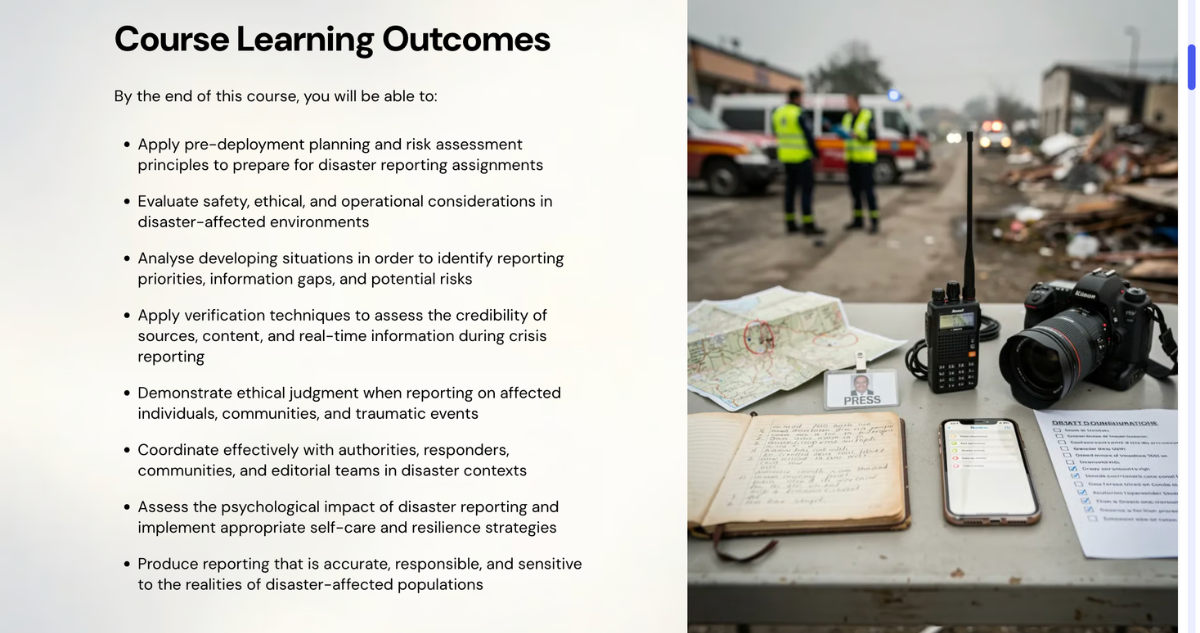
By the end of this course, you will be able to:
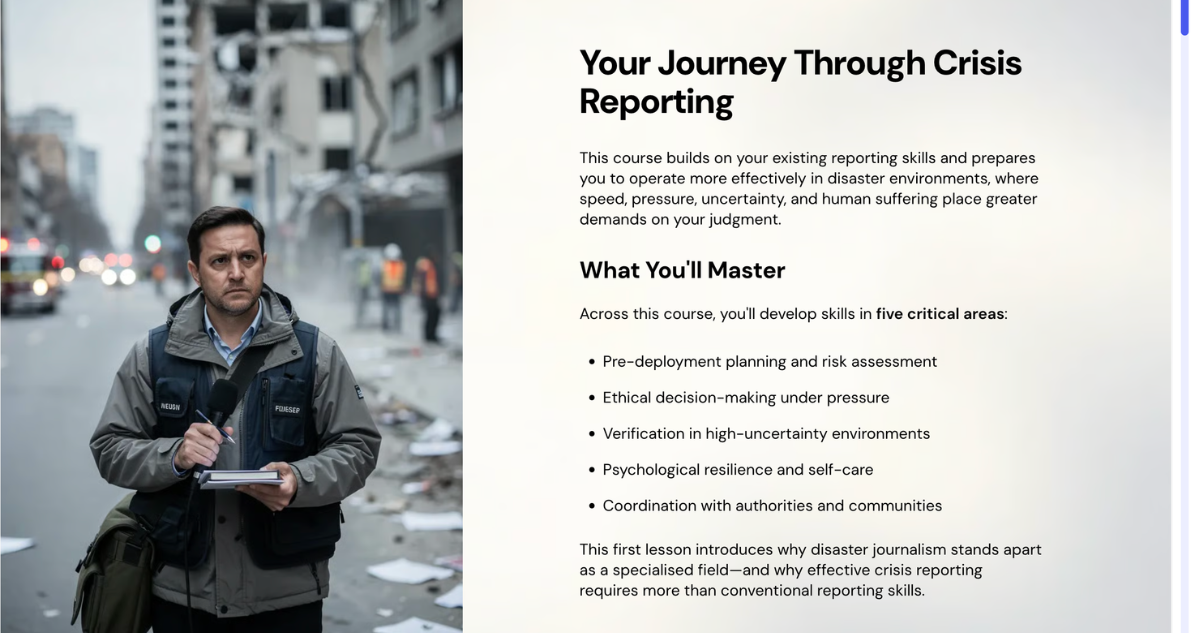
- Apply pre-deployment planning and risk assessment principles to prepare for disaster reporting assignments
- Evaluate safety, ethical, and operational considerations in disaster-affected environments
- Analyse developing situations in order to identify reporting priorities, information gaps, and potential risks
- Apply verification techniques to assess the credibility of sources, content, and real-time information during crisis reporting
- Demonstrate ethical judgment when reporting on affected individuals, communities, and traumatic events
- Coordinate effectively with authorities, responders, communities, and editorial teams in disaster contexts
- Assess the psychological impact of disaster reporting and implement appropriate self-care and resilience strategies
- Produce reporting that is accurate, responsible, and sensitive to the realities of disaster-affected populations
Course Features
- Self-paced, interactive online course
- Scenario-based lessons, knowledge checks, and final assessment
- Approx. 1.5–2 hours of guided learning
- Certificate of Completion upon passing the final assessment
Further Training and Resources
This course can also support learners preparing for broader high-risk or disaster-affected environments, alongside our practical training options such as Disaster Zone Safety Training and other online courses.
Learners are also encouraged to follow recognised journalism safety and trauma resources such as the Dart Center for Journalism and Trauma and the Committee to Protect Journalists.
Report Responsibly When It Matters Most
Disaster reporting demands preparation, judgment, and discipline. This course gives you a practical foundation in field awareness, ethics, verification, coordination, and resilience so you can approach disaster coverage with greater confidence and professionalism.
Train now. Report responsibly. Be ready when it matters.
Related products
-
Sale!

Situational Awareness Essentials
Original price was: $50.00.$10.00Current price is: $10.00. -
Sale!

Noncombatant Evacuation Operations (NEO)
Original price was: $249.00.$199.00Current price is: $199.00. -
Sale!

Travel Risk Management Framework
Original price was: $249.00.$199.00Current price is: $199.00.